ANIMOID
Ann Lislegaard
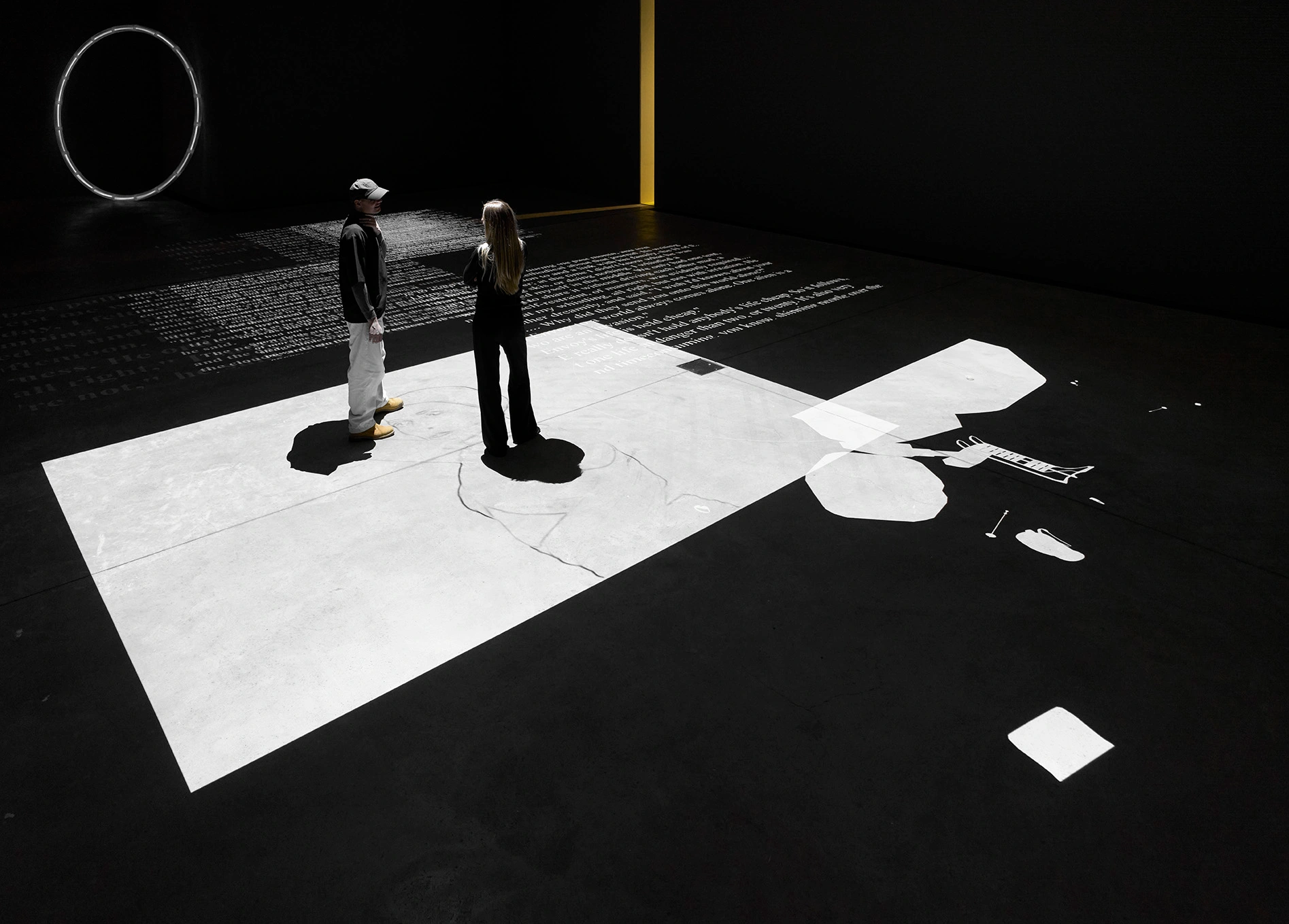
ANIMOID – Ann Lislegaard, installation view. Photo: Anders Sune Berg
From a three-metre-high LED screen, an animated owl towers in front of us. It speaks in fragments and in multiple voices. At times, the owl seems sleepy, as if it is about to fall from its branch, only to suddenly wake up and look around, surprised and slightly confused. Colours glide across the screen, and the image flickers, constantly reminding us of its digital and artificial nature.
The owl is from Danish-Norwegian artist Ann Lislegaard’s Oracles, Owls… Some Animals Never Sleep (2012/2021). It appears as an oracle, speaking in riddles and broken sentences. The oracle points towards something hidden and speaks in a language we must learn to understand. It reveals how our understanding of the world is connected to language.
A pioneer in digital art
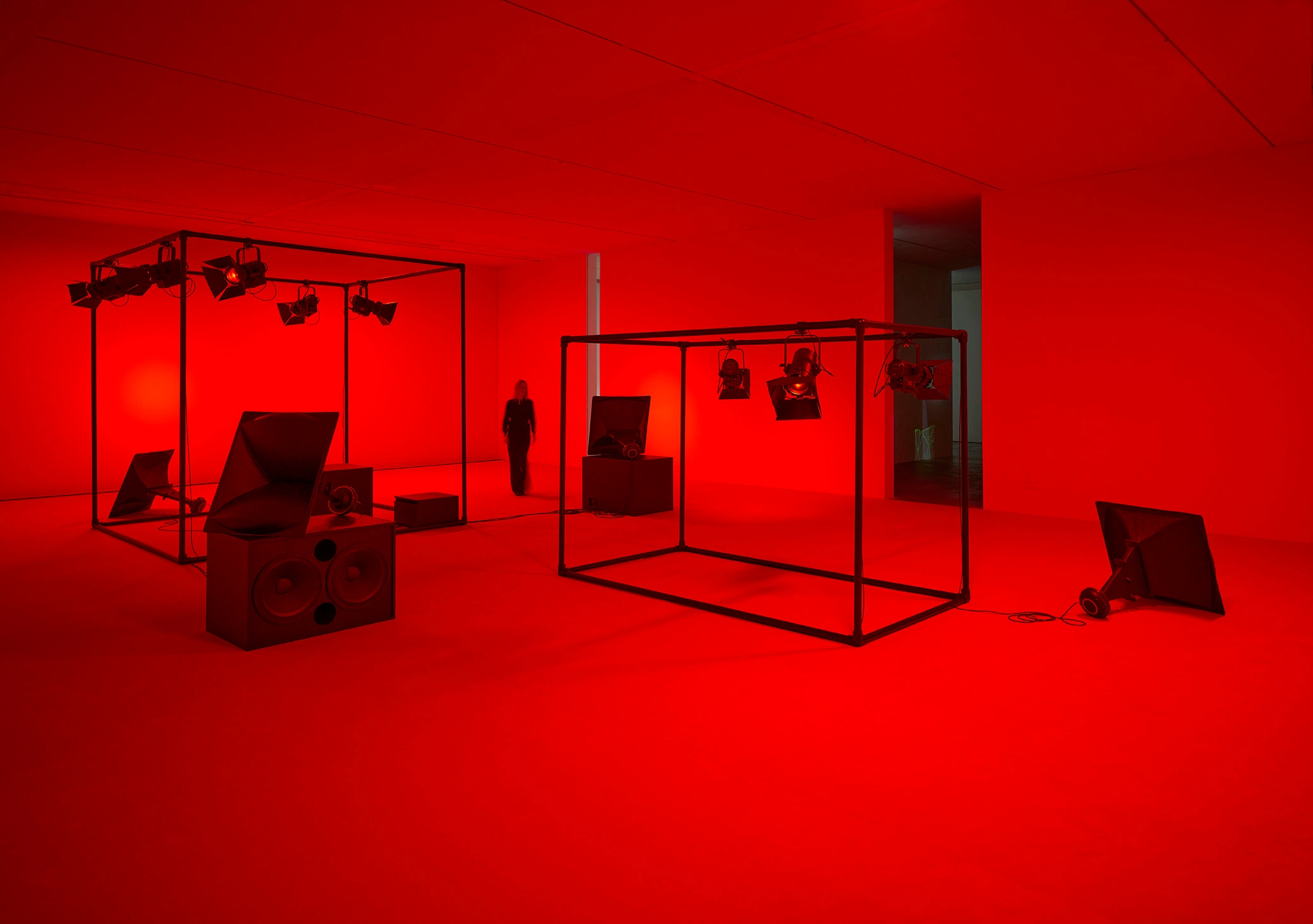
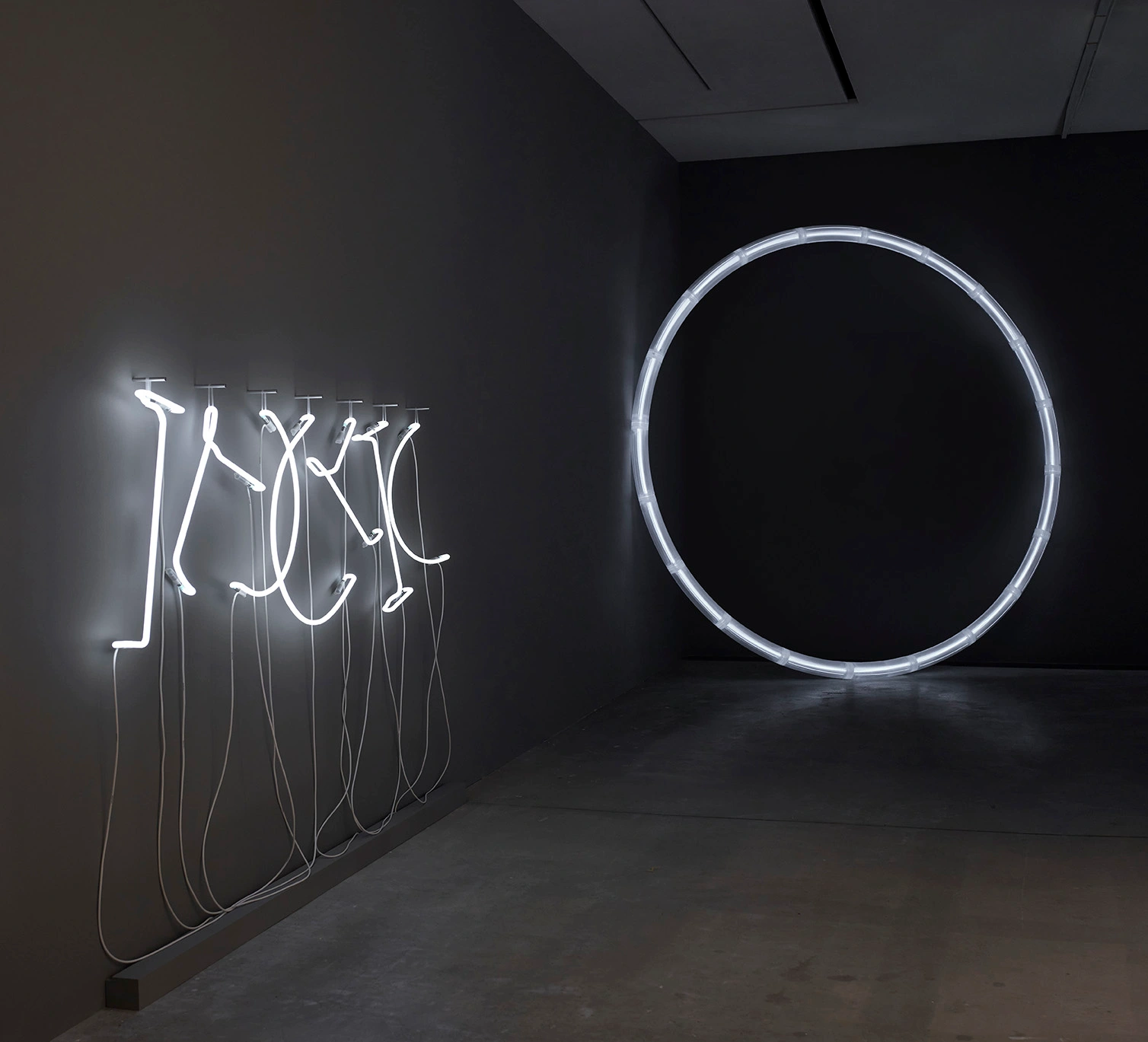
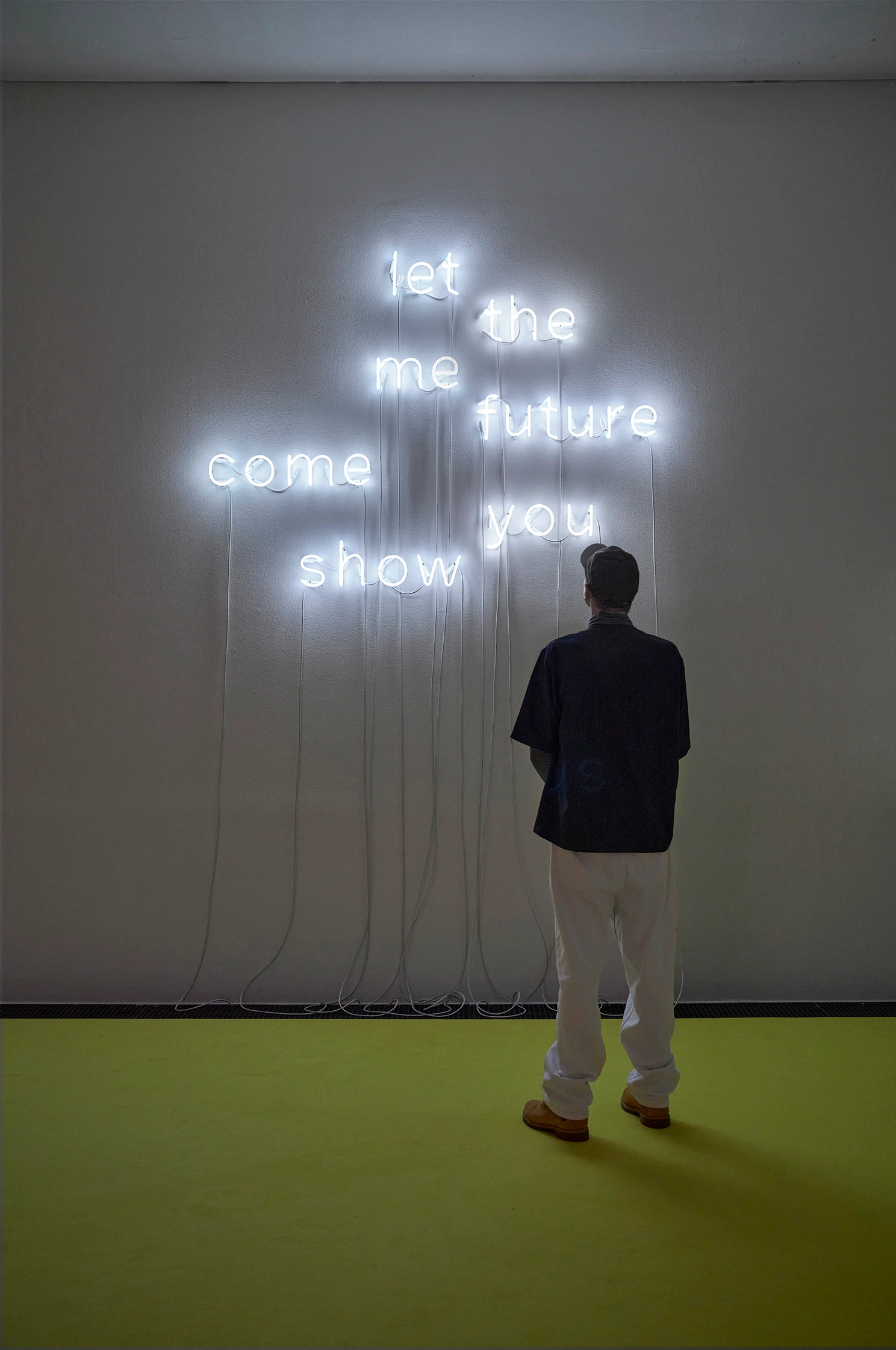
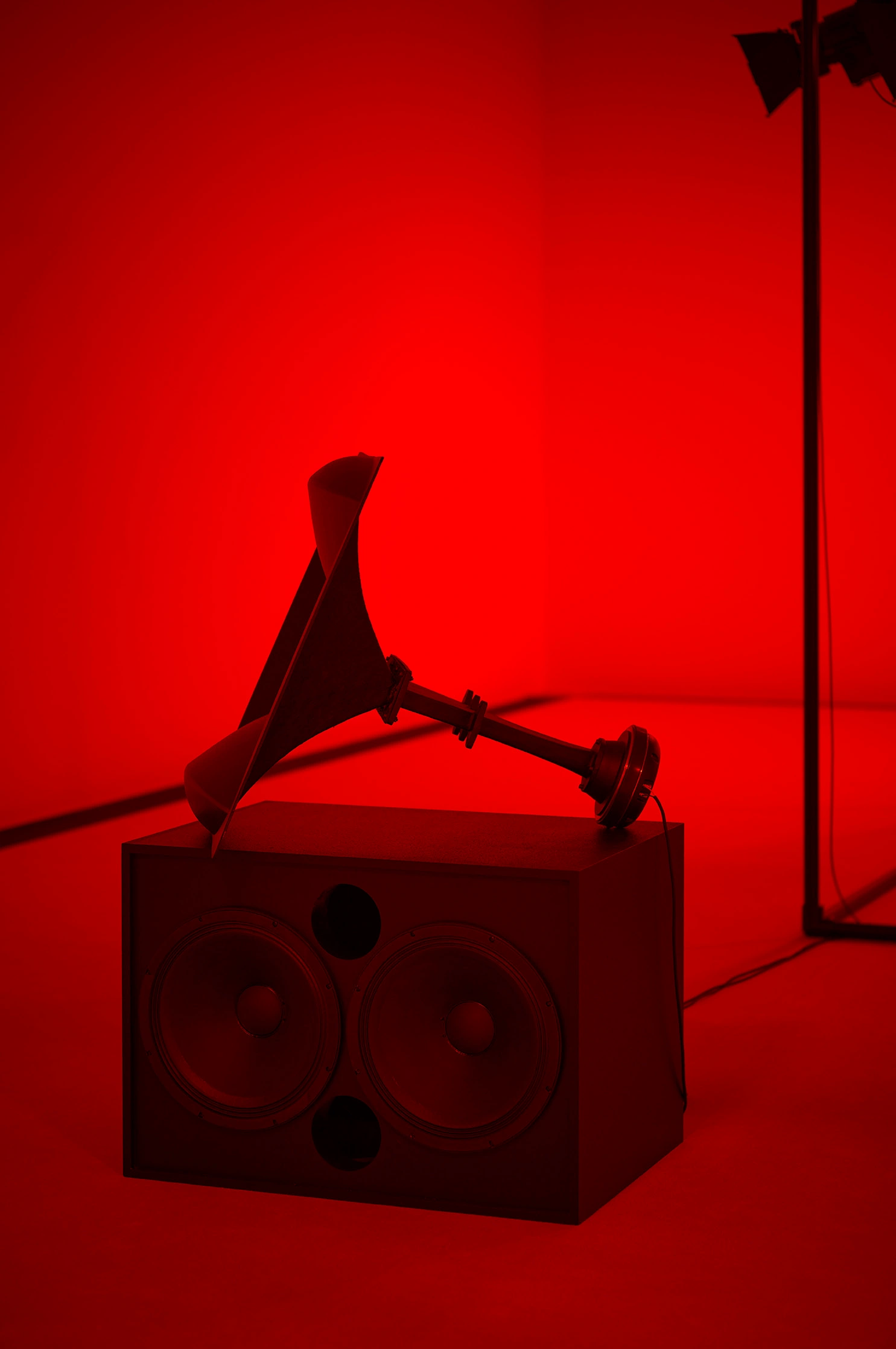
ANIMOID opened on 24 September 2026 and is the first major presentation of Lislegaard’s work in Denmark. Lislegaard is a pioneer of feminist futurism and the use of digital technology and 3D animation. The exhibition brings together works spanning more than 30 years and a range of media, from science-fiction-inspired animations to sculpture and immersive sound and light installations.
Among the works is Spinning and Weaving Ada (2016), in which an animated spider weaves a web of letters across a series of mirrored boxes that together form the name Ada Lovelace. Inspired by the automatic loom, Lovelace recognised the possibilities of mechanical computing machines and was among the first to imagine a machine capable of more than simply performing calculations. The work connects technology, language and networks, drawing links between Lovelace’s historical work and Lislegaard’s own digitally based artistic practice. As a viewer, you are drawn into the reflections of the work, where any sense of an overall view constantly slips away. The work celebrates Lovelace and the feminist history of technology, tracing its roots back to spinning and weaving. The mirrored surfaces create a space of ruptures and connections, where forgotten events can re-emerge if we pick up the threads of stories that have never been written.
Science fiction as a way to view the present
The exhibition’s title, ANIMOID, refers to the synthetic animals representing extinct species in the film Blade Runner (1982), as well as to the very idea of animation: images set in motion, but also the life already stirring in matter and in all things. The title points to a world in which animals, and their role as symbols of care and empathy, are disappearing and being replaced by artificial beings. At the same time, it connects the loss of nature with the hope embedded in ‘anima’ and ‘animation’: the giving of life and the creation of movement. In this way, ANIMOID becomes an image of loss and change, while also referring to the central role of animation in Lislegaard’s art.
Often drawing on science fiction, Lislegaard explores how technology and language shape the way we see the world. What happens when language breaks down, or when the digital shifts what we perceive? How does technology influence our ideas of the body, gender and identity? And where is the boundary between the human and the artificially created?
The exhibition opens up a universe that is both captivating and unsettling. Here, the familiar is displaced, and new connections emerge. It is not a world that offers clear answers, but one that sparks reflection and invites us to experience and rethink our present and the future in new ways.
Biography
Ann Lislegaard (b. 1962) has worked across a range of media since the 1990s. Her artistic practice has played a significant role in the development of digital art in Denmark and internationally. As an artist and professor at the Royal Danish Academy of Fine Arts, she has inspired several generations of younger artists.
Born in Norway, Lislegaard studied in Copenhagen and lived and worked in New York for many years. She has represented Denmark at the Venice Biennale and participated in biennials in São Paulo, Lyon, Sydney and Gwangju. She has held numerous solo exhibitions around the world, including at the Museum of Contemporary Art Detroit, Henry Art Gallery in Seattle, Raven Row in London, Moderna Museet in Stockholm and the Astrup Fearnley Museum in Oslo.
Her works are held in collections including those of the Solomon R. Guggenheim Museum in New York, Museo Nacional Centro de Arte Reina Sofía in Madrid, Louisiana Museum of Modern Art in Humlebæk and Kunstmuseum Wolfsburg.
ANIMOID is the first major solo presentation of her artistic practice in Denmark.
You can book a private tour of Ann Lislegaard - Animoid here.
The exhibition is an international collaboration between
Henie Onstad Kunstsenter
Arken Museum of Contemporary Art
Kunstmuseum Wolfsburg
Museum of Contemporary Art Kiasma
The exhibition is supported by
The Augustinus Foundation
Ny Carlsbergfondet
Beckett-Fonden
Knud Højgaards Fond
Dansk Tennis Fond
Konsul George Jorck og Hustru Emma Jorck’s Fond
Lemvigh-Müller Fonden
Statens Kunstfond
Elly og Aage W. Jensens Fond
OCA - Office for Contemporary Art Norway